First Christmas Teddy Bear Illustrations: A Brand Designer’s Review
As a brand designer and content marketer, I spend my days dissecting why certain visuals stop the scroll while others vanish into the digital noise. When evaluating a graphic design asset, I am not just looking at aesthetics; I am looking for strategic alignment, emotional resonance, and versatility across multiple touchpoints. Recently, I had the opportunity to review the First Christmas Teddy Bear illustration for a potential integration into a seasonal marketing campaign. This review explores how this specific illustration performs in real-world branding scenarios, from social media graphics to packaging design.
First Impressions and Emotional Tone
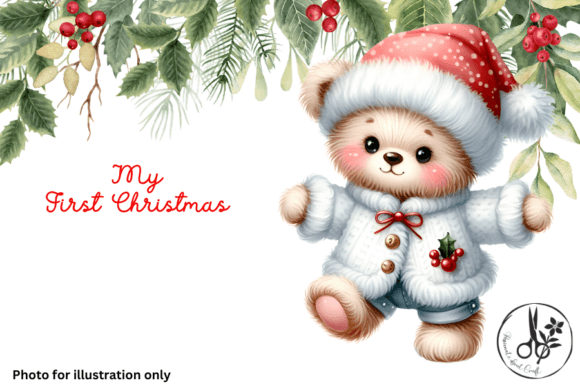
The moment you encounter the First Christmas Teddy Bear, it communicates a distinct narrative of warmth, nostalgia, and gentle celebration. In the crowded landscape of holiday marketing, where bold reds and aggressive sales tactics often dominate, this asset offers a softer, more intimate approach. It creates an immediate sense of comfort, which is crucial for brands aiming to build audience trust during the festive season.
From a visual hierarchy perspective, the teddy bear serves as a strong focal point without overwhelming the viewer. The design feels suitable for small business branding that values authenticity over corporate polish. It strikes a balance between playful and professional, making it ideal for lifestyle content, handmade products, and family-oriented services. The mood it sets is one of anticipation and joy, qualities that can significantly enhance the perceived value of a digital product or a physical gift item.
Practical Applications in Marketing Campaigns
To understand the true value of this creative design, let us frame it within a real project scenario. Imagine a small boutique launching a limited-edition holiday collection or a digital coach creating a lead magnet for the new year. How does the First Christmas Teddy Bear fit into this workflow?
- Social Media Graphics: The illustration is perfectly scaled for Instagram posts and Facebook ads. Its clean lines ensure it remains recognizable even when viewed on smaller mobile screens. It adds a human element to promotional banners, helping to break up text-heavy layouts and draw attention to key offers.
- Packaging Design: For businesses selling physical goods, this asset can serve as a decorative brand element on boxes, tags, and inserts. It elevates the unboxing experience, turning a simple package into a memorable part of the customer journey.
- Digital Ads and Web Design: When used in web design headers or email banners, the teddy bear provides a welcoming entry point for visitors. It signals that the brand cares about detail and emotion, not just transactions.
- Printable Design and Editorial: As a printable design, it works beautifully for flyers, posters, and editorial layouts. The high-quality vector nature (assuming standard industry formats like SVG or PNG) ensures crisp reproduction regardless of size.
Supporting Core Marketing Goals
Integrating the First Christmas Teddy Bear into your visual strategy supports several critical marketing goals. First, it strengthens the first impression. In a sea of generic holiday clipart, a well-crafted illustration stands out by offering character and charm. Second, it enhances visual consistency. If your brand identity relies on soft colors and rounded typography, this asset aligns seamlessly, reinforcing your brand identity across all channels.
Furthermore, it aids in better product presentation. By pairing the illustration with clear copy and strategic whitespace, you create a professional appearance that encourages engagement. The emotional connection fostered by the teddy bear motif can lead to higher retention rates, as customers are more likely to remember a brand that made them feel something positive.
Strategic Placement and Best Uses
Not every design asset fits every context. The First Christmas Teddy Bear excels in specific areas where its personality can shine without distraction. It is particularly effective as a hero graphic for landing pages or as a central element in content bundles. For instance, if you are designing a Canva template for a holiday giveaway, this illustration can anchor the composition, guiding the eye toward the call-to-action button.
It also works well as a logo design accent for niche brands focused on children, pets, or home decor. By incorporating the bear into a monogram or badge, you create a unique brand identity that is instantly recognizable. Additionally, using it in media kits or pitch decks can demonstrate a creative and thoughtful approach to partnership opportunities.
Where to Exercise Caution
While versatile, there are limitations to consider. This asset may not be suitable for formal corporate branding where a more serious tone is required. It should be avoided in dense information layouts where clarity is paramount, as the illustrative style might compete with data visualization. Similarly, on low-contrast backgrounds, the details of the bear may get lost, reducing its impact.
Designers should also be mindful of text-heavy ads. If the primary message is complex, adding a decorative element like the teddy bear could clutter the visual hierarchy. In such cases, it is better to use simpler geometric shapes or icons. Always test the asset against competitor visuals to ensure it does not blend in too much or stand out in a way that feels incongruent with your industry standards.
Brand Designer Notes for Implementation
To maximize the potential of the First Christmas Teddy Bear, I recommend following these practical steps before finalizing any campaign materials:
- Color Palette Testing: Place the illustration inside your actual brand color palette. Does it harmonize, or does it clash? Adjusting the hue or saturation slightly may help it integrate more smoothly.
- Black and White Check: Preview the asset in black and white. This helps evaluate its form and structure independent of color, ensuring it holds up in faxed documents or single-color prints.
- Typography Pairing: Experiment with different font styles. The bear pairs well with script fonts for a handwritten feel, but also complements sans serif fonts for a modern look. Avoid overly ornate display fonts that might fight for attention.
- Mobile Readability: Scale the image down to mobile dimensions. Ensure that key details remain visible and that the file size does not slow down page load times.
- Licensing Verification: Before using this commercial design in paid campaigns or client work, confirm the commercial license terms. Understanding usage rights is essential for protecting your business legally.
In conclusion, the First Christmas Teddy Bear is a robust design asset that brings warmth and professionalism to holiday marketing efforts. By understanding its strengths and limitations, marketers and designers can leverage it to create cohesive, engaging, and trustworthy brand experiences. Whether used in SVG design files for print or as a PNG design element for web, it has the potential to elevate your content marketing strategy and connect deeply with your audience.